


We conduct fundamental research in atomic, molecular, and quantum physics, with a particular focus on strongly interacting quantum systems. Core research areas include dipolar quantum gases, supersolidity, quantum liquids, and ultracold as well as thermal Rydberg systems for applications in quantum science and quantum technologies.
The institute’s research combines fundamental questions in quantum physics with perspectives for quantum simulation, quantum sensing, photonic quantum devices, and future applications in quantum information science.
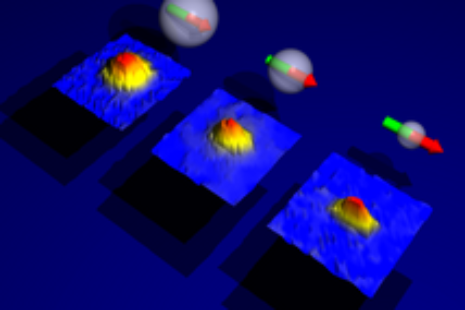
Major achievements include the first observation of stable quantum droplets in dipolar Bose gases, and the experimental demonstration of their stabilization by quantum fluctuations. Building on these results, we realized the first observation of the phase transition from a Bose–Einstein condensate to a supersolid state and demonstrated the Goldstone mode as a hallmark of superfluidity in a supersolid. These breakthroughs have substantially advanced the understanding of novel quantum many-body states.
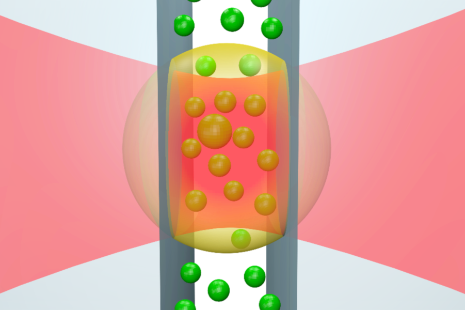
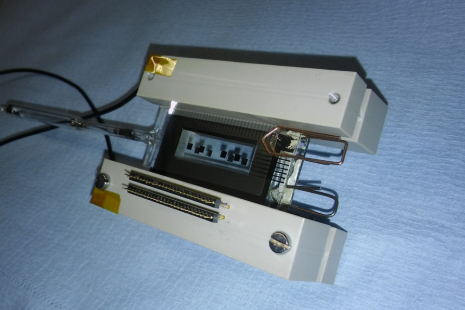
We made seminal contributions to the study of ultralong-range Rydberg molecules, including the first observation of permanent electric dipole moments in homonuclear molecules. Further achievements include the experimental discovery of novel molecular binding mechanisms between ions and Rydberg atoms, as well as investigations of single electrons as impurities in Bose–Einstein condensates. In the field of quantum sensing, the institute pioneered microwave electrometry using Rydberg atoms in thermal vapor cells, a technique that today forms the basis of emerging commercial atomic sensor technologies.




Contact

5. Physikalisches Institut
Administration